

Every photograph has a story—but sometimes the most memorable story isn't the one captured in the frame. It's the unexpected adventure behind it.
Photographers often find themselves in situations that no one could have planned: chance encounters with wildlife, unexpected acts of kindness, challenging weather, equipment failures, emotional moments, or split-second decisions that lead to unforgettable images. These experiences become part of every photographer's journey and often teach lessons that no camera manual ever could.
In this new Top Photo Awards series, we're sharing real stories submitted by members of our community. Some will make you smile, others may surprise or inspire you, but each one reminds us that photography is about much more than cameras and settings—it's about the people, places, and moments we experience along the way.
We hope these stories encourage you to see photography from a different perspective and perhaps remind you of your own unforgettable moments behind the lens.
If you have a photography story worth sharing, we'd love to hear it. It might be featured in a future edition of this series.
Why I'll Never Forget My First Photo Walk
Every photographer remembers their first photo walk—but few imagine it will lead to a photograph that changes their journey.
In this story, Bangladeshi photographer Galib Rahman Nadim shares how a day filled with uncertainty, borrowed gear, and self-doubt unexpectedly produced one of his most meaningful images. It's a reminder that sometimes the photographs we believe we've missed become the ones we'll treasure forever.
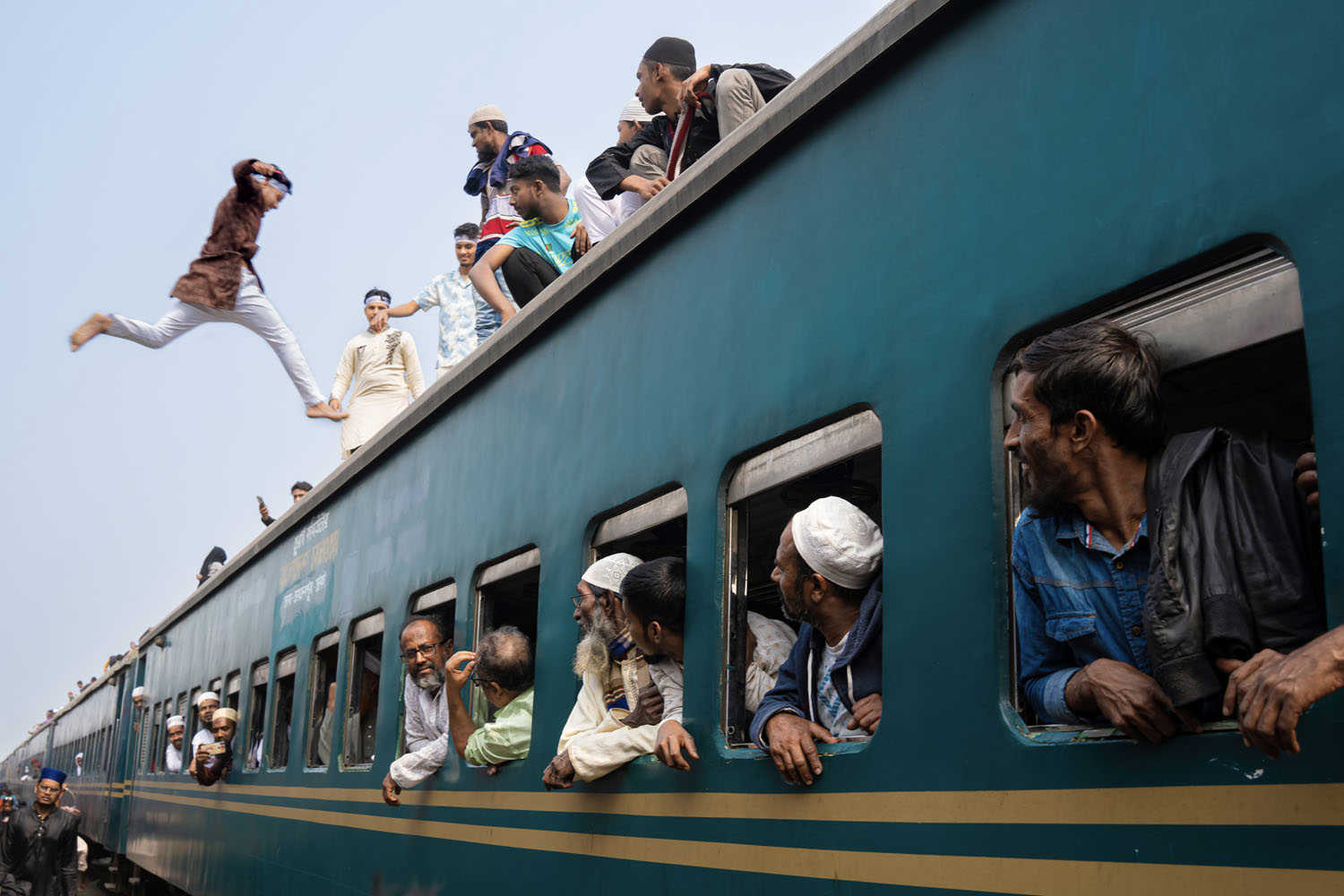
“Long before I owned a camera, I used to photograph the world with my mobile phone.
When I was a college student, bringing a phone into class was prohibited, and if a teacher discovered one, we could be punished. Still, I always carried my phone because I loved photographing the world around me. I would take pictures before and after classes whenever I saw something interesting.
In 2025, I finally bought my first camera, a Sony A6400. I had never used a proper camera before. I had never joined a photo walk, had no suitable lens for street photography, and, honestly, I was afraid to go on a photo walk alone.
That year, Biswa Ijtema, one of the world's largest Muslim gatherings, was taking place near my hometown of Tongi, Bangladesh. People were arriving from all over the country, many of them by train. There were also many international visitors. For the first time, I asked one of my seniors to go with me so I could photograph the event with more confidence and guidance.
I was completely inexperienced. I was using my Sony A6400 with a 50mm lens, and I quickly realized that I couldn't fit everything I wanted into the frame. We eventually made our way to Tongi Railway Station Road, where trains were standing by and thousands of people were getting on and off. There were people everywhere—different faces, clothes, colors, and countless little moments unfolding all around me. I kept photographing, almost forgetting that my lens was not wide enough.
After some time, my senior stopped to rest, and I asked if I could borrow his Sigma 24–70mm lens. A little later, I noticed a group of photographers suddenly running toward something. Two trains were standing close to each other, and people were moving between them. When I got closer, I saw several young boys jumping from the roof of one train to another.
I knew immediately that something extraordinary was happening in front of me. But capturing it was another story.
There were people everywhere. I was still learning how to handle a camera, and the large, heavy lens made it even harder to react quickly. I pressed the shutter again and again, but I knew I wasn't capturing the moment the way I wanted. I left convinced that I had missed the shot.
When the train finally departed and the gathering came to an end, our photo walk was over as well. My senior later invited me to his home and taught me how to organize and edit my photographs in Lightroom. As I reviewed the images, I realized that although I had taken hundreds of photographs that day, only a few were truly successful. Still, I carefully went through them and selected this frame along with several others.
There is another part of this photograph's story that makes it even more special to me. I had photographed everything in JPEG, and after editing, I transferred only my finished photographs to my hard drive. The original files were later deleted from my senior's computer, along with all of the original EXIF data.
As a result, I lost the original files from my very first photo walk.
Yet this photograph went on to bring me recognition that I never expected from an image I once believed I had failed to capture. Even today, people sometimes find it difficult to believe that it was taken during my very first photo walk, with my very first camera.
I had gone there believing I needed the perfect camera, the perfect lens, and the perfect technique. Instead, that day taught me that photography is also about being present, taking chances, and learning from failure. Sometimes the images we doubt the most become the ones that mean the most.
I had planned to return to Biswa Ijtema in 2026 to photograph it again with more experience, but the event was not held that year due to the national election. Perhaps that was for the best.
I believe that when I return someday, I will see the place differently and, hopefully, create even better photographs. But no matter what I capture in the future, I'll never forget the lessons I learned on that very first photo walk.”
The Story Behind the Photo: 1520
Sometimes the best conversations don't require a shared language.
In this heartwarming story, a simple question, a flock of sheep, and a number written in the sand remind us that curiosity, patience, and kindness can connect people from completely different worlds.
“Several years ago, I was traveling through Georgia. During the trip, I had even started learning a little Georgian and tried to use it whenever I could.
To be honest, though, the only phrase I could confidently say—almost without an accent—was, "Hello, I don't understand."
Armed with this very limited vocabulary, I decided to head into the mountains.
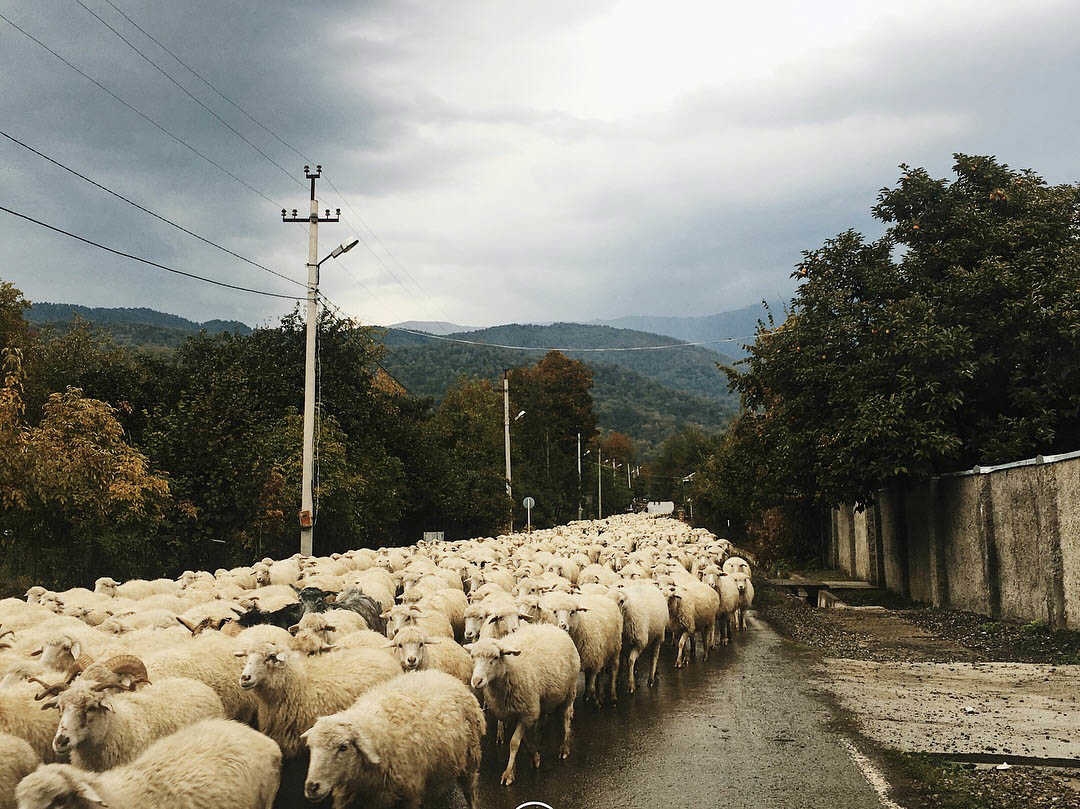
It was late September, just before October. Shepherds were bringing their flocks of sheep and cattle down from the mountains ahead of the autumn landslides.
As I drove higher into the mountains to photograph a mountain river, I suddenly found myself stuck in an unexpected traffic jam.
A traffic jam... made entirely of sheep.
The flock was enormous, and I became curious. I wanted to ask the shepherd how many sheep he had. The problem was that I had no idea how to ask such a question in Georgian.
The shepherd was a friendly man, probably around eighty years old.
I tried speaking to him in English, but he smiled and replied with the very phrase I knew so well:
"I don't understand."
For about a minute, we kept tossing that same sentence back and forth like a ball, each of us hoping it would somehow turn into a real conversation.
Eventually, I realized words weren't going to help. Only gestures would.
I knew how to count to ten in Georgian, so I pointed at ten sheep one by one, counting aloud. Then I swept my arm across the entire flock and tried to ask how many sheep there were altogether.
At first, the shepherd thought I wanted to buy them.
After several more attempts—and I wasn't about to give up—he finally understood what I was asking. Smiling proudly, he answered with a number that was clearly far beyond the limits of my Georgian vocabulary.
Laughing, I replied with my favorite phrase once again:
"I don't understand."
He laughed too.
Then he stepped aside, picked up a stick, and wrote the number in the sand.
1520.
We both burst into laughter, relieved that we had finally managed to understand each other without sharing a common language. We hugged, wished each other good luck, and said goodbye.
Before leaving, I captured one final photograph of the flock as it slowly passed by me.
Their tiny hooves gradually erased the number 1520 that the shepherd had written in the sand—leaving behind only the memory of one of the warmest encounters of my journey.”
When the Forest Had Other Plans
Every so often a photography trip gives us something completely different from what we came looking for.
After hours of waiting for birds at Nal Damyanti Lake in India, an unexpected encounter with a tiny mantis turned into a remarkable moment of patience, trust, and connection with nature.
What began as a birding trip became an experience the photographer would never forget.
“Once, few months ago, I went to the jungles of Uttrakhand, India. A very known place called Sattal which means seven lakes. Next to that place there is a lake called Nal Damyanti lake which is known for birding. Me and three more bird photographers were waiting for a good shot past two hours but unfortunately nothing came up to us.
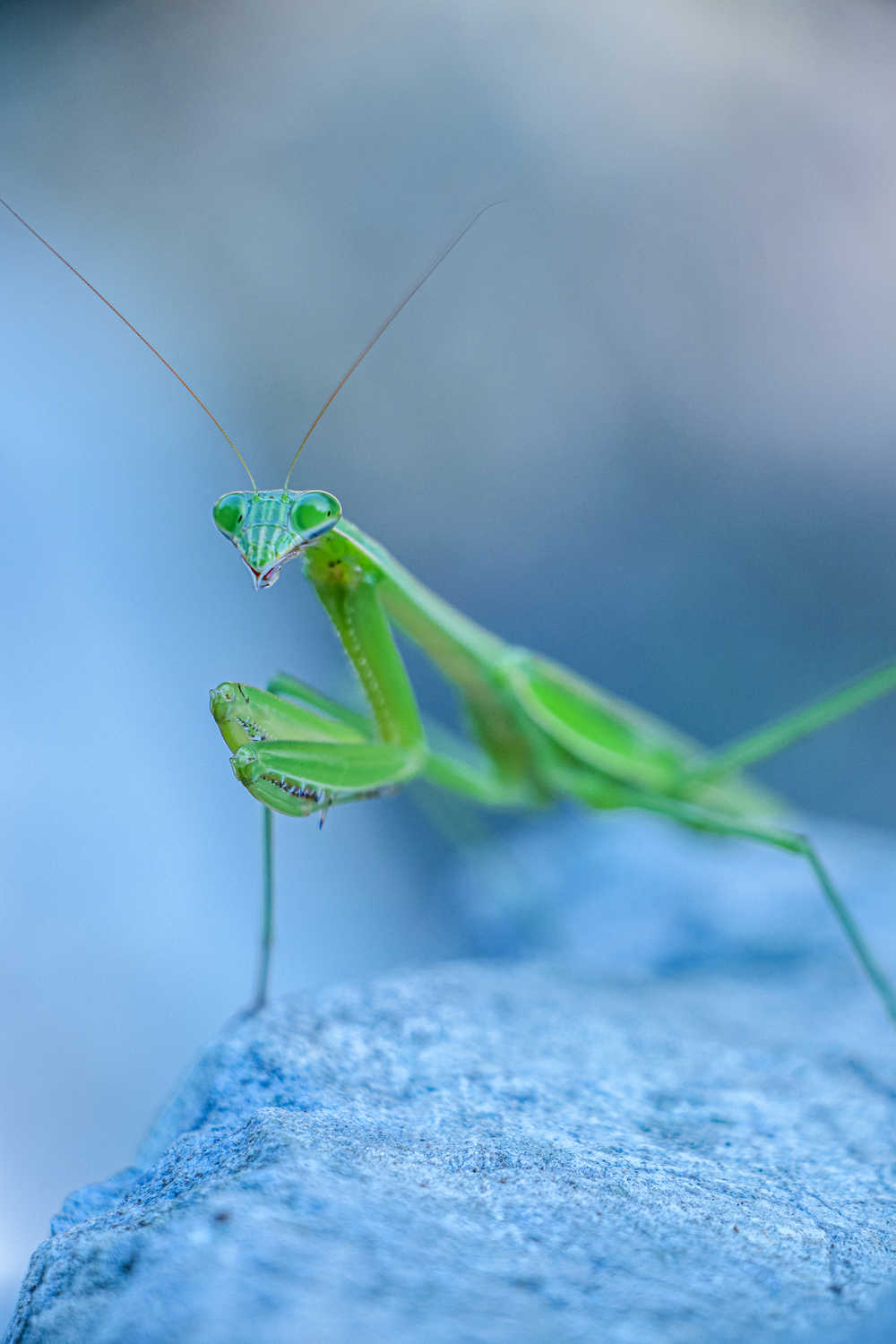
Gradually everybody left. I chose not to as I have drove down from the city to have some natural oxygen and greens. After waiting for another half an hour I had notice, that there is something green which is sitting on a big rock next to me. I went close and noticed that it's a cute little Mantis (an insect).
I considered myself lucky to see something after spending hours. I told myself, let's meet him and see confirm whether there it's a two-way relationship. I quietly went next to him and sat for 15 mins. Slowly, he started moving towards myself. It took approximately 7 minutes for him to climb my left shoe and sit. The moment was magical. I had felt so nice around his positive energy that I forgot for what I had gone there for. I witnessed, the results of keeping patience and gaining trust.
Gradually-gradually he started walking and took the route which was in front of him in a flow, which was basically my green cargo pants and brown warmer. He was following his heart and so am I. Now we both, were so close to each other that we could see each other eyes. He cutely titled his head towards me. I smiled. Through my cargo pants, he took the lane of my neck, shoulder and had reached my palm literally.
I cannot explain that feeling.
I had felt that positive aura of his around me that left me in the state of Moksha.
I thanked God and him for trusting me and coming close to me to become a close friend.
I came for birding but experienced magic.
Nature understands our energies as well and just like good friend, feels the need and if required heals us.
”
How Keesje Inspired My Passion for Animal Photography
At times the greatest inspiration comes from the ones closest to us.
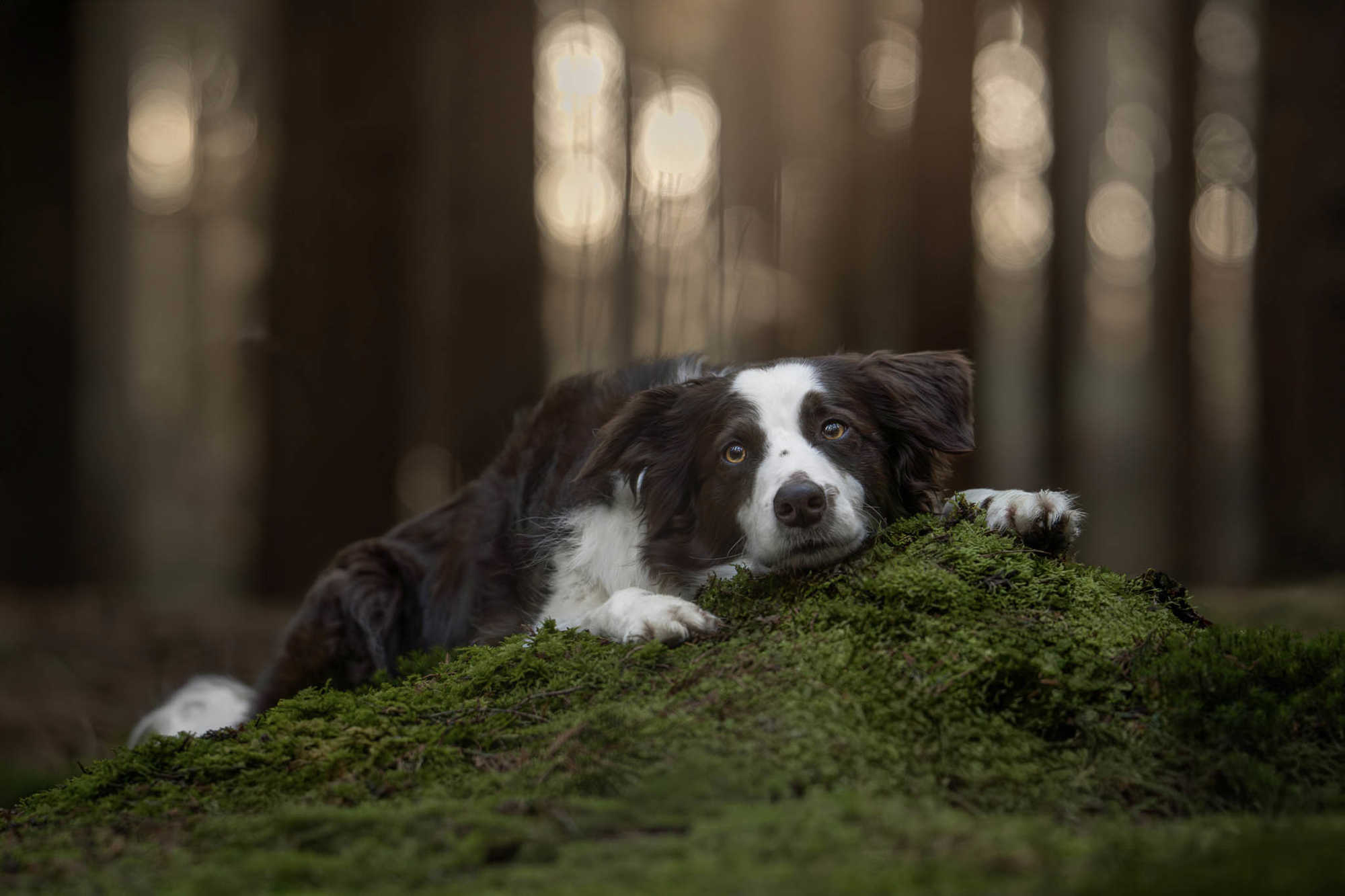
In this heartfelt story, photographer Claudi van Berkel shares how a lifelong love of photography, a childhood filled with disposable cameras, and her beloved Miniature Schnauzer, Keesje, led her to discover a true passion for animal photography. It's a journey of patience, growth, and learning to capture animals exactly as they are.
“My love for photography started at an early age.
When I was still in primary school, I often bought a disposable camera to take with me on school trips or when I went out to do something fun with my mother or friends.
Once the camera was full, my mother and I would take it to the shop to get the film developed.
I can still remember how exciting it was to pick up the pack of photos and look at them at home. How did they turn out?
Usually, there were a few bad shots in there, but oh well, that’s all part of it, right?
My mother had an analogue camera of her own, which she often let me borrow.
My father loved taking photos too, so I’m pretty sure I inherited this passion from him.
At some point, my mother gifted me a compact camera so I could take even more photos.
I brought it along on holidays to capture all our memories.
We often traveled to Poland to visit family, including my grandmother. Looking back, I am so grateful I had that camera, as it allowed me to take photos of my grandmother as well.
Six years ago, my dog came into my life a sweet Miniature Schnauzer named Keesje.
Back then, I owned a Nikon D3300. I used it to take photos of him, entirely on automatic mode at first, because I didn't know much about camera settings other than wanting to capture beautiful photos of my dog.
I can say with certainty that Keesje was the inspiration to start photographing dogs.
A year and a half ago, I used my savings to buy a new camera: a Sony A6400.
I wanted something portable that I could easily take on adventures with Keesje.
I remember feeling so frustrated in the beginning because my photos weren't coming out the way I wanted. I had a lot to learn, especially about using manual mode.
But after plenty of practice with my own dog, and later with other dog models, I got the hang of it and fell in love with dog photography.
I’ve now been photographing dogs and horses for a year and a half, and I absolutely love it. The best part about animal photography is capturing emotion and spontaneous moments, showing animals as they truly are.
During a photoshoot, nothing is forced.
I simply go with the flow.
If a dog doesn't want to sit or lie down, that’s completely fine, we just do whatever the dog feels like doing.
The animal's well-being is my highest priority.
There is always plenty of time between shots for play, sniffing around, and, of course, lots of treats! Since I started dog photography, I’ve had the pleasure of photographing many dogs and horses, each with its own distinct character.
Every animal is different, what works for one dog might not work for another, so it’s always fun to discover what works for each individual animal.
And one thing I have discovered about myself is all the weird noises I can make.
I never thought I would be squeaking in the middle of the forest or making cat noises in the middle of the city.
At the beginning, it felt pretty unnatural to do so, but at a certain point, you couldn't care less haha.
Over the past year and a half that I’ve been photographing animals, I’ve learned so much. Looking back at the photos I took when I first started and comparing them to the ones I take now, I’ve definitely grown.
But my learning journey is far from over! I’m super excited to keep photographing and to continue developing my skills!”
More Than a Portrait: The Woman Behind My Journey
Sometimes the most important person in a photographer's journey is the one who first recognizes their potential.
In this deeply personal story, a friend's encouragement became the beginning of a new career, leading from those first photographs to publications, exhibitions, and international recognition.
Behind every achievement is a friendship that means far more than any award.
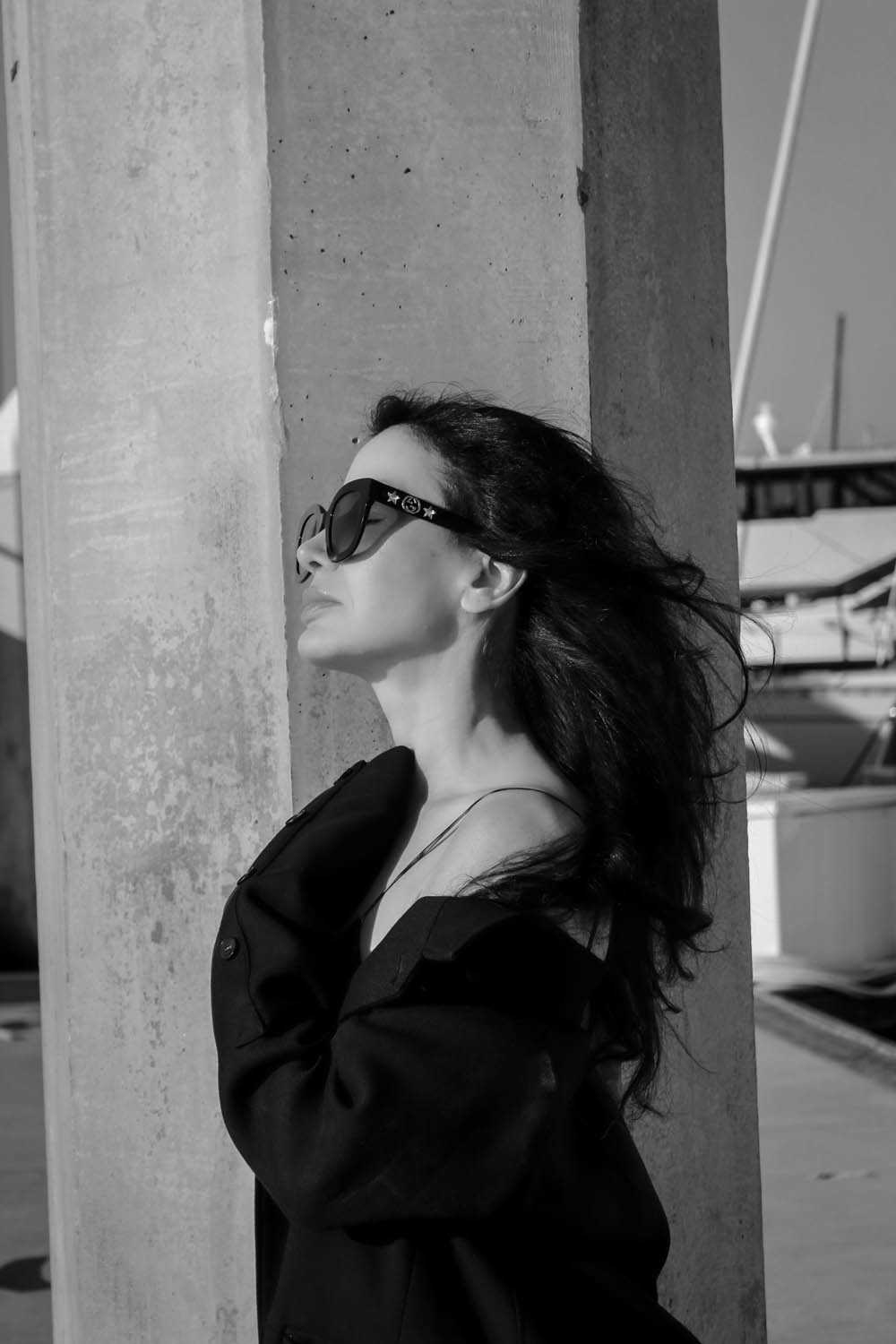
“In the photo, you can see Katherine Castro. She’s an Emmy-nominated actress, producer, host of the “Esencia” podcast, and a true Latina from the Dominican Republic. She’s my best friend and mentor—one of the most important people in my life.
Two years ago, I started my business because she encouraged me to do so. At that time, I was at a turning point in my health, which forced me to rethink things. Katherine saw some photos of me and recognized potential that I had never been aware of before.
So I started my own business in July 2024, and in October of that same year, I flew to LA and took just a few snapshots of Katherine at Santa Monica Beach. Even those pictures garnered some attention.
A year later, I was already a bit more experienced and had my photos published in a few magazines. In November 2025, Katherine planned another photo shoot with me. Weeks earlier, she had already decided on the setting and outfit that would work best. These photos, which were taken in Marina del Rey (CA), are very special to me. To me, they show not only the portrait of a beautiful woman, but also the immense support and deep friendship behind it all.
Katherine had such a positive influence on my entire journey as a photographer that I will be forever grateful to her. In a way, she saved my life.”
Whispers in the Dark
From time to time extraordinary photographs are waiting just outside our door.
In “Whispers in the Dark,” photographer Nipun Raj shares how a chance encounter between two crickets on his terrace became a mysterious long-exposure image—a reminder that even the smallest moments in nature can reveal unexpected beauty when we stop and pay attention.
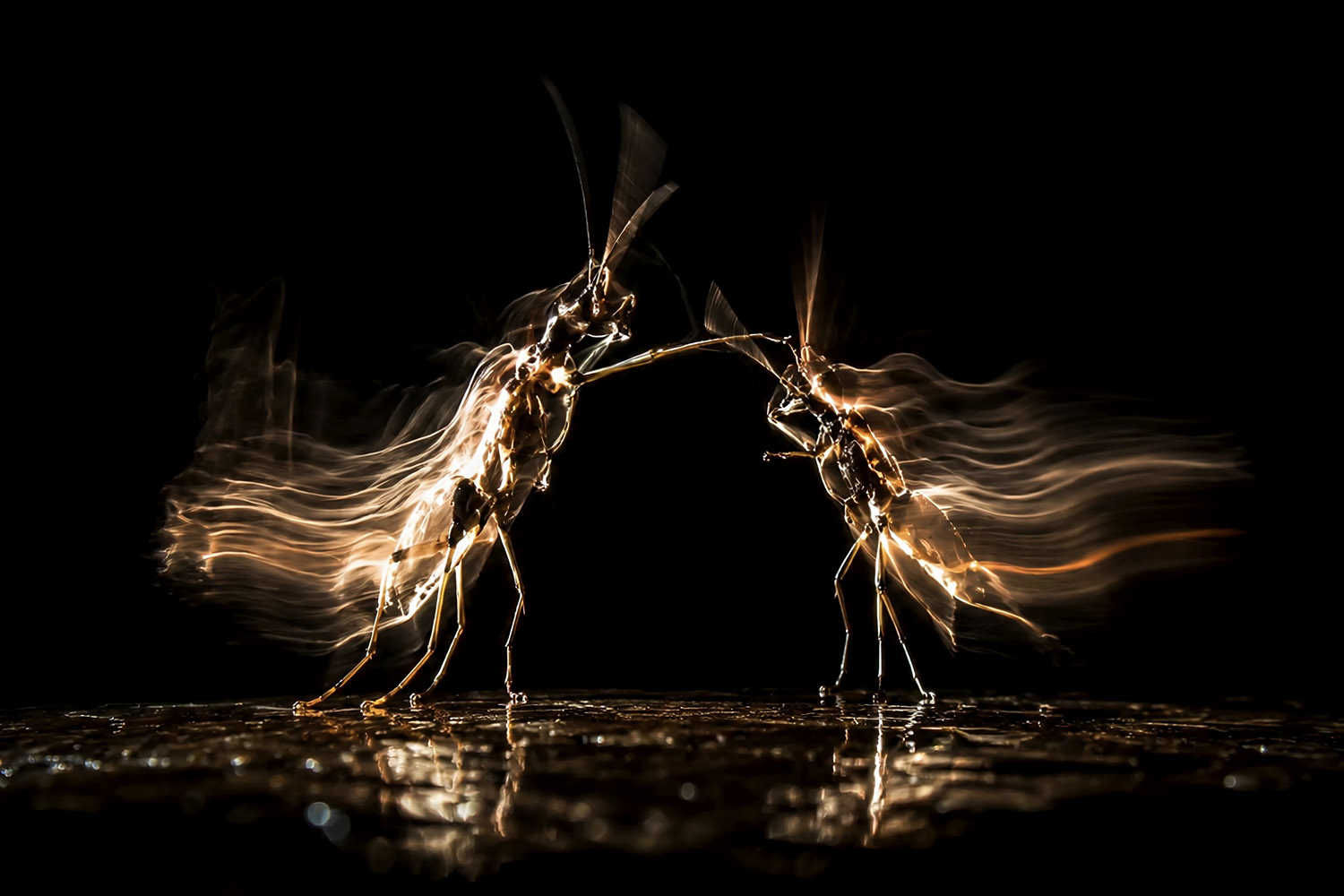
“It was a quiet night on my terrace when I noticed two cricket insects facing each other in an unusual and fascinating interaction.
What seemed like an ordinary moment quickly caught my attention and I decided to capture it using a long-exposure technique!!
Instead of freezing their movement, the long exposure recorded the motion of their wings and bodies as beautiful, flowing trails of light.
The insects appeared almost like they were engaged in a silent conversation, creating a surreal scene against the darkness.
I love how the photograph transforms such a small and often overlooked moment in nature into something dramatic and mysterious.
For me, this image is special because it shows that extraordinary stories can unfold even on my own terrace, if we simply stop and observe!!
This remains one of my favourite photographs, not just because of how it looks, but because of the rare behaviour and unexpected moment I was lucky enough to witness.”
The Moment Two Strangers Became Connected
There are moments when two strangers meet and the connection feels immediate.
During an encounter in Brazil, two women from different continents embraced for the very first time with a warmth that seemed to carry something deeper than the moment itself. Their unexpected connection became a powerful expression of shared history, cultural memory, identity, and belonging.
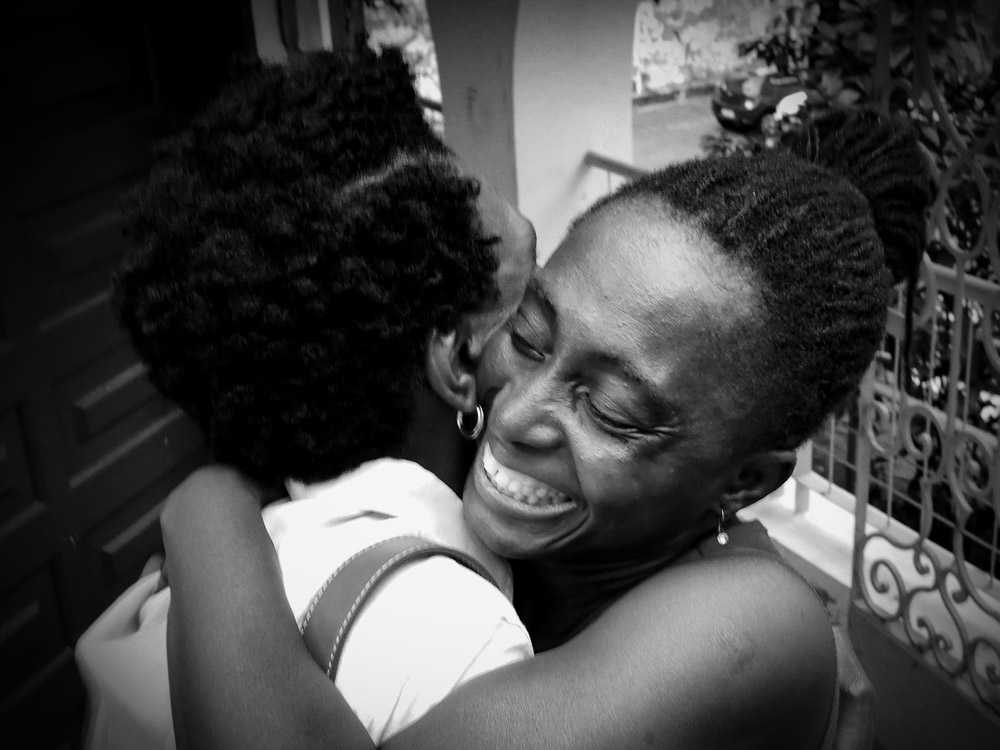
“This was an encounter in Brazil brimming with positive energy.
The two women met for the first time the moment they embraced, and they come from two different continents.
Yet their connection was so deep, strong and loving all at once that their energy was almost tangible.
The photograph depicts a connection that goes beyond the personal, one that stems from a shared history and cultural memory. A sense of closeness between two people who did not know each other, but who share something deeper. This embrace is an expression of identity, memory and belonging.”
Defying Gravity in the Heart of the Desert
A great photograph can happen before we even realize we've captured it.
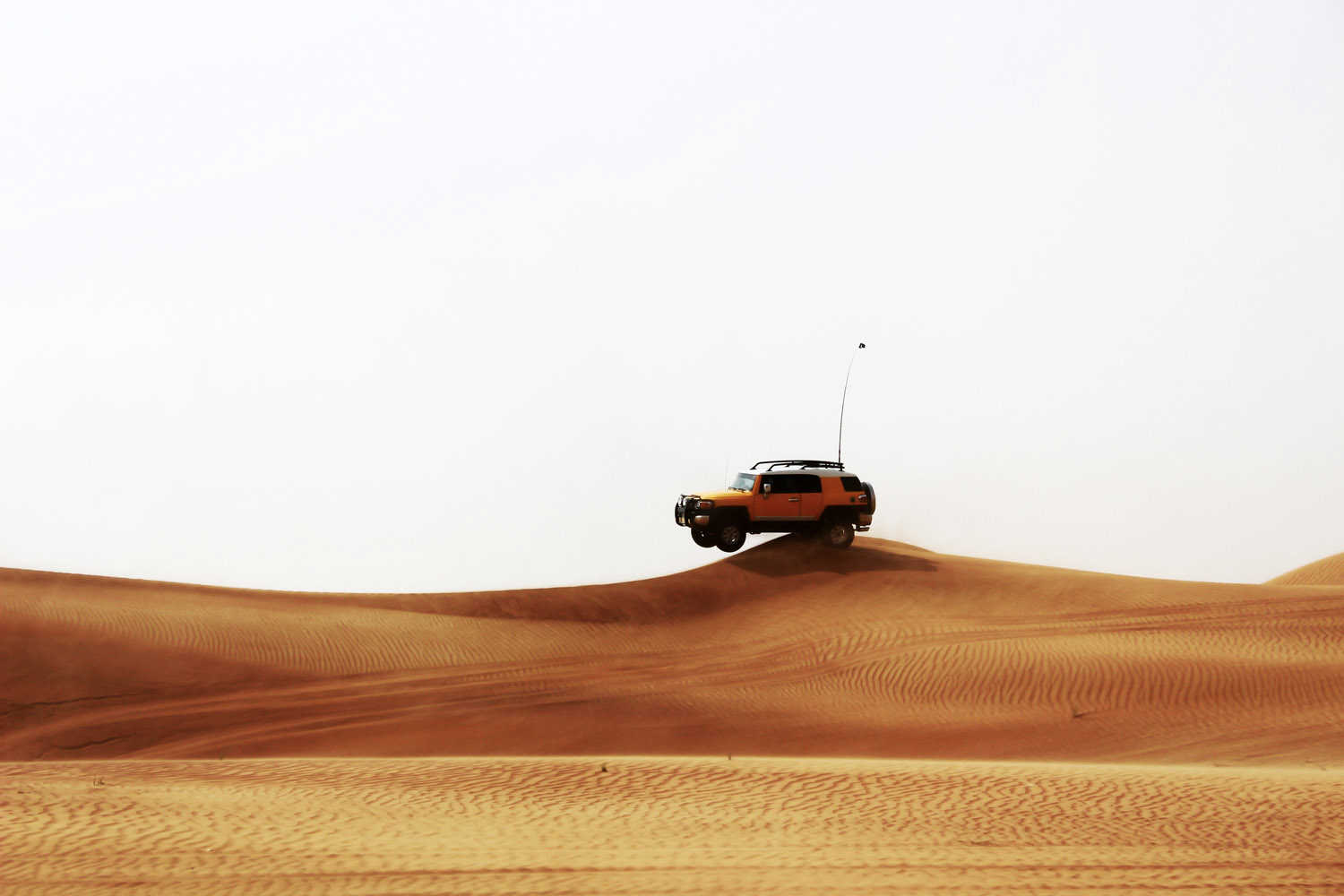
During a high-speed dune-bashing adventure in the UAE desert, photographer Pouria Zarnegar caught a split-second moment of an off-road vehicle completely airborne above the sand.
It was only later, while reviewing his images at home, that he discovered just how perfectly he had frozen a moment that lasted only a fraction of a second.
“I was in the UAE desert on a dune bashing trip with a friend and a professional off-road team. It was a hot sunny day, the kind where the air outside hits you like a wall the moment you open the door. Inside the car the AC was running and cold, but we were both sweating anyway. Not from the heat. From the speed.
The team leader was pushing hard. Endless dunes, one after another, going up and dropping down at speeds that made your stomach leave your body for a second. Every time we crested a dune there was a moment where you genuinely did not know what was on the other side. It was one of the most intense experiences I have had, and I have been in a lot of situations with a camera.
I had my Canon in my hand the whole time, trying to shoot while being thrown left and right, scanning for something worth capturing. It is harder than it sounds when the vehicle itself is the one moving.
At some point I noticed a car on our right, on a parallel path through the dunes. It was moving alone, fast, and kept appearing and disappearing between the ridges. I raised the camera, waited, and took a few shots without really knowing what I had.
When I got home and opened the files I almost scrolled past it. Then I stopped.
The car was completely airborne, four wheels off the ground, suspended in mid-air above the dune ridge, the vast white sky behind it, the orange sand below. Nothing around it. Just a machine defying gravity in the middle of the desert, caught in a fraction of a second I did not even know I had captured.
That was the moment the phrase "capturing the moment" stopped being something I just said and became something I actually understood.”
Photography is about much more than the final image.
Behind the camera are unexpected encounters, funny mistakes, difficult moments, incredible coincidences, friendships, adventures, and experiences that stay with us long after the shutter is pressed.
Now we want to hear yours.
If something unusual, touching, funny, sad, surprising, or unforgettable has happened during your photography journey, share your story with Top Photo Awards, along with a photograph that helps illustrate the moment.
Send your story to contact@topphotoawards.com with the subject line “Story”.
Your experience could be featured in the next edition of Behind the Lens and shared with photographers around the world.