

One of the most common mistakes photographers make before publishing their work or submitting to photo contests is treating the image straight out of camera as the finished result. Sometimes the captured moment is already strong enough to attract attention. But in many cases, the raw image is only the beginning of the creative process.
Editing is not about “fixing” photography. It is about shaping atmosphere, controlling attention, refining composition, and helping the final image feel closer to what the photographer originally imagined. A camera records information. The photographer decides what the image should actually feel like.
The photographers below approach editing in very different ways — cinematic storytelling, minimalism, conceptual world-building — but all of them demonstrate how thoughtful post-processing can completely transform the emotional impact of an image before it is published or submitted to a contest.
Pouria Zarnegar
Pouria Zarnegar’s work is a strong example of how editing can shape atmosphere without losing authenticity. His original captures already contain compelling composition and emotion, but the edited versions feel far more immersive and cinematic.
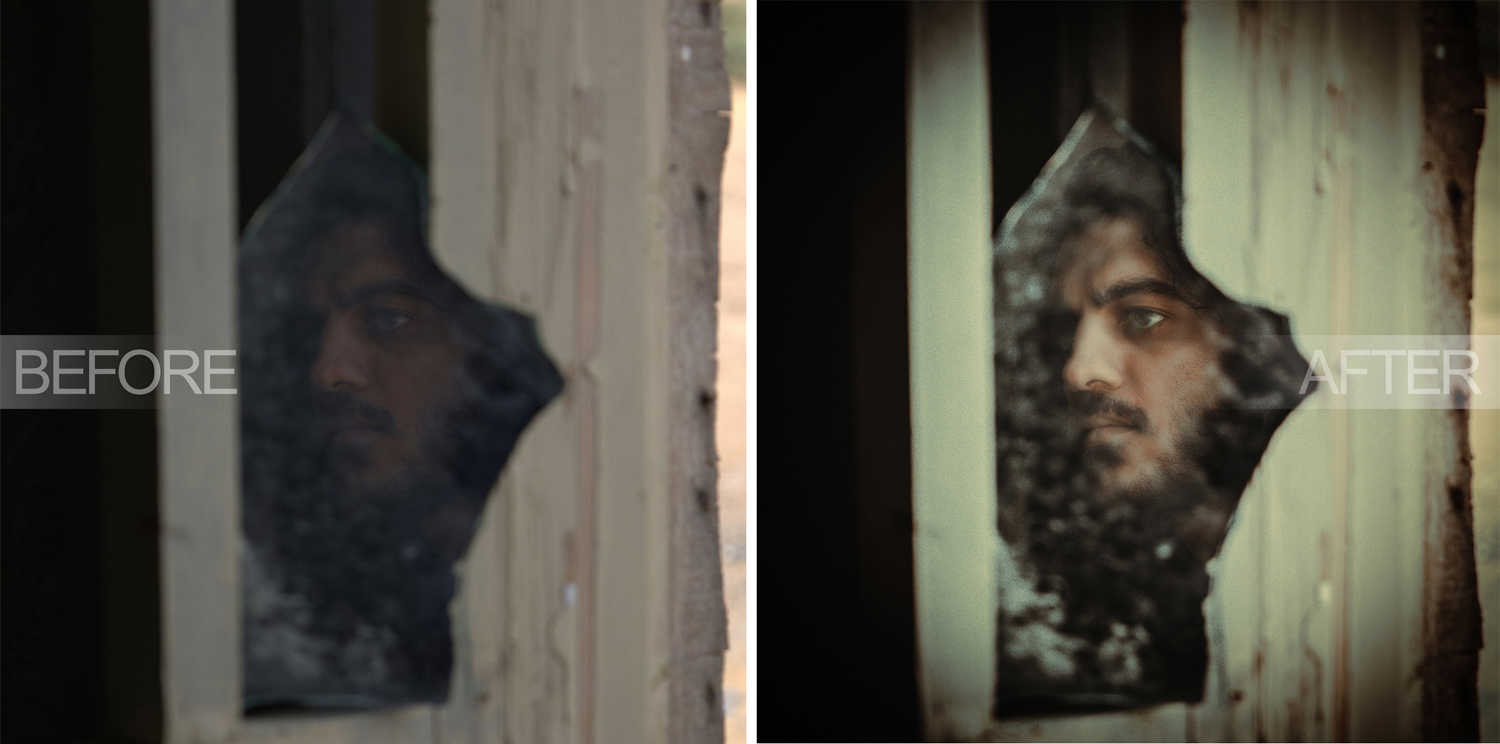
Portrait
In the portrait example below, the original image already works compositionally. But after editing, the darker tones, refined contrast, and warmer grading create a much stronger emotional presence and isolate the subject more effectively from the surrounding environment.
The Storefront
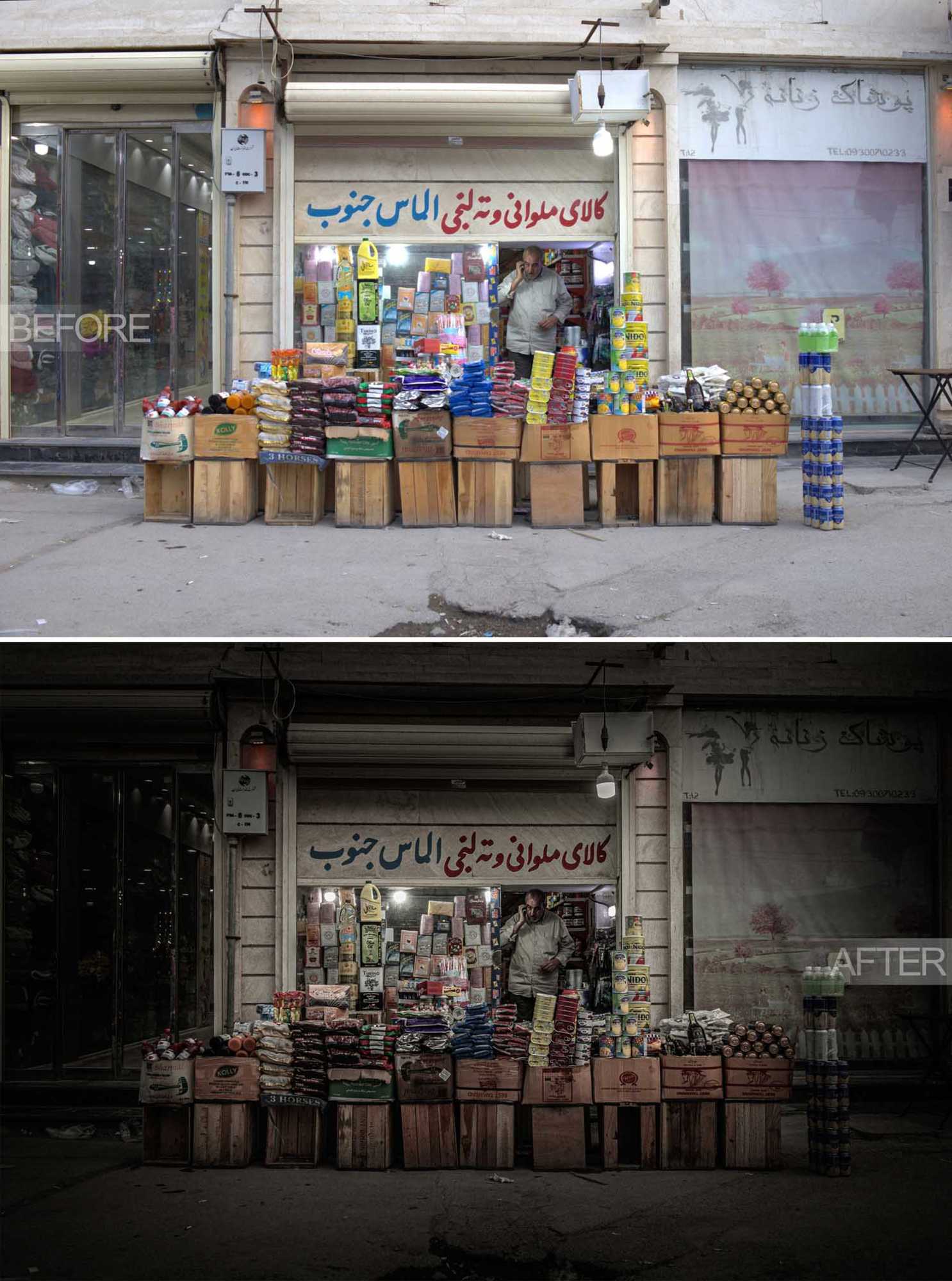
His documentary-style street work shows a similar approach. The original storefront image captures a real moment, but the edited version creates much stronger atmosphere through controlled shadows, darker edges, and more intentional focus on the illuminated subject.
Landscape
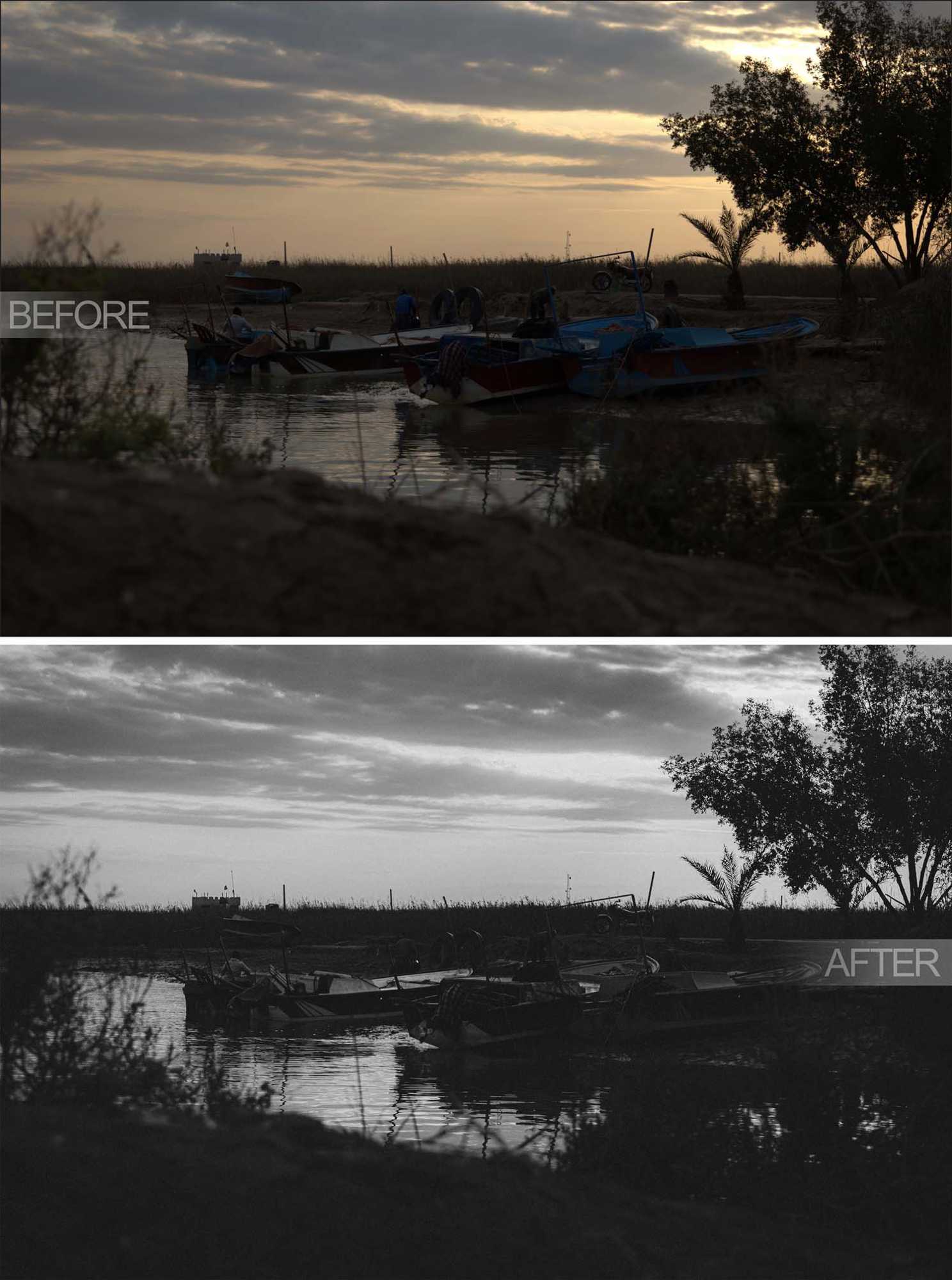
His final example demonstrates how tonal editing and black-and-white conversion can completely reshape emotional atmosphere. The edited landscape feels quieter, heavier, and much more timeless than the original frame.
Donia Ahmed
Donia Ahmed approaches editing differently. Her work demonstrates how post-processing can become part of storytelling itself rather than simply technical correction.
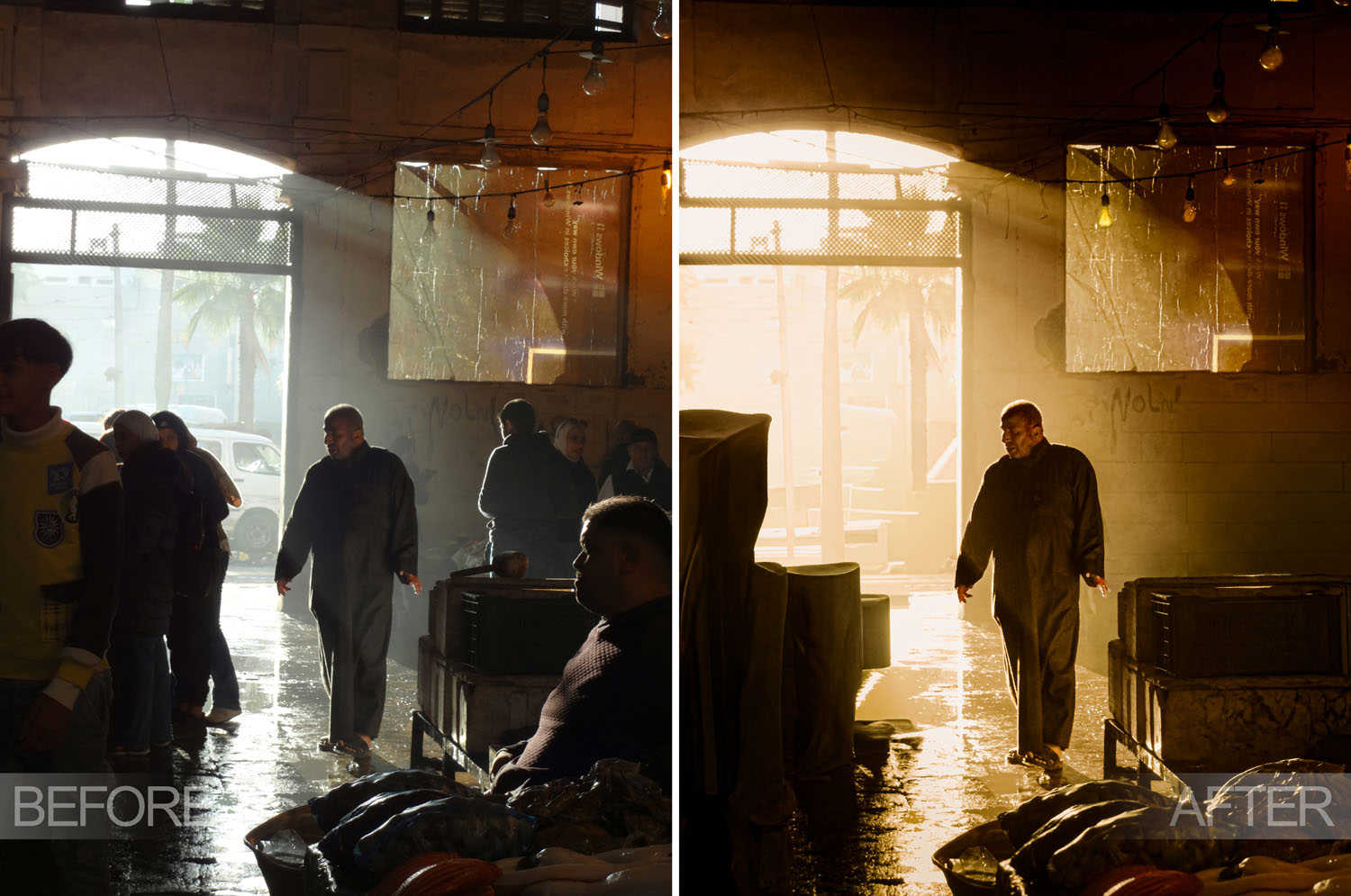
The Market Scene
The original market image already contains beautiful natural light and strong subject placement. But the edited version changes the emotional experience entirely. The added light rays, warmer tones, and cleaned-up distractions guide the viewer directly toward the subject and create a much more cinematic atmosphere.
The Minimalist Ducks
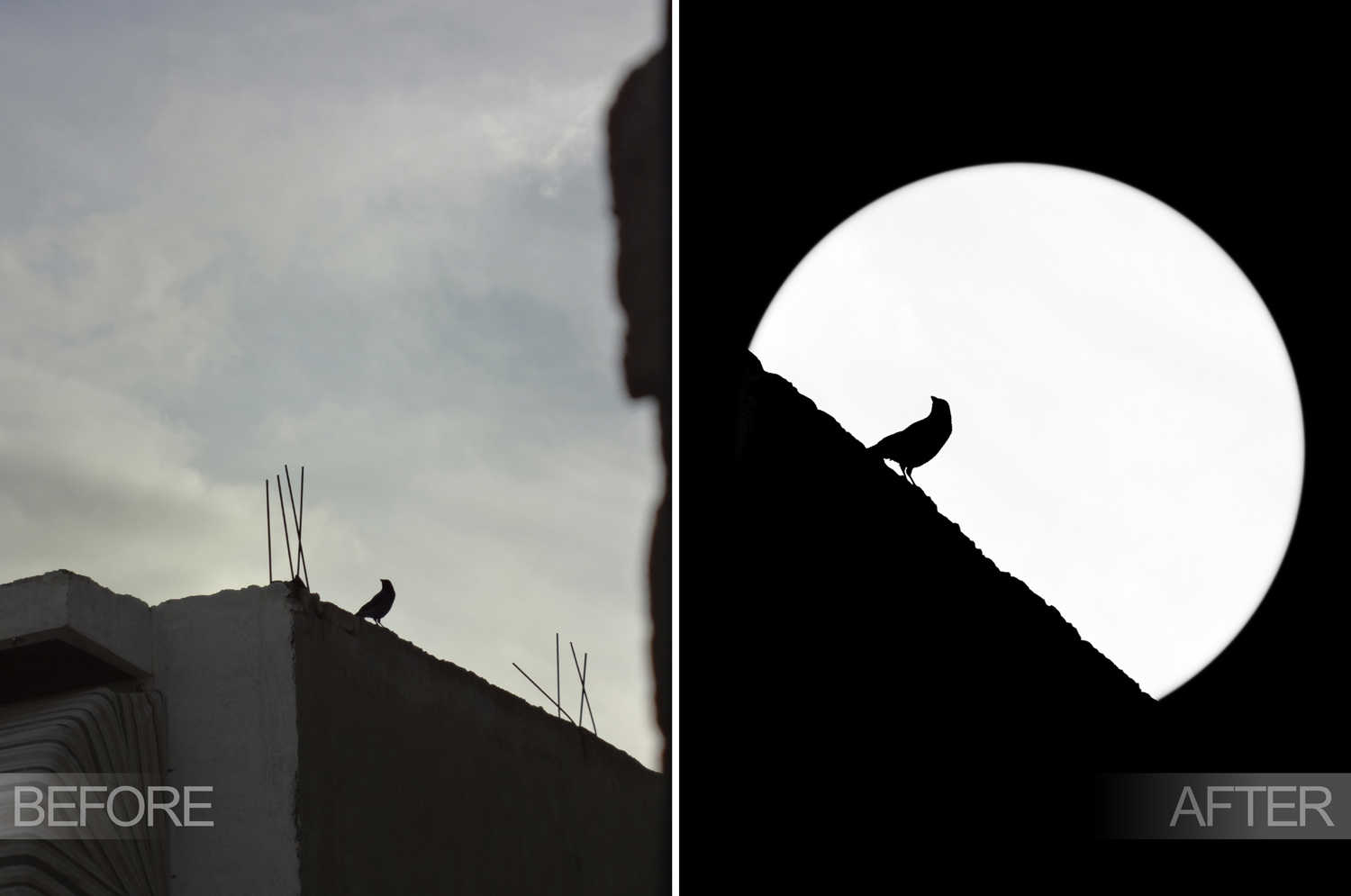
Her second example takes the opposite direction. Instead of enhancing atmosphere, the edit simplifies the frame almost completely. Structural distractions disappear, the composition becomes cleaner, and the final image transforms into a minimalist silhouette built around shape and negative space.
It is a reminder that editing does not always mean adding more. Sometimes strong editing is about removing what weakens the image.
Andrey Sobolev
Andrey Sobolev’s example moves further into conceptual territory. Here, editing is not simply part of the workflow — it becomes part of the entire artistic idea.
The concept for this portrait was developed before the shoot itself. The goal was calm minimalism: an image with quiet presence and almost no visual noise.
To achieve this atmosphere, Andrey replaced the original studio environment with a CGI-created world built in Blender 3D. Large areas of negative space were intentionally preserved, allowing the final composition to feel calm, balanced, and timeless.
The final image still feels believable, even though a significant part of the environment no longer exists in reality. The editing does not try to impress through effects — it quietly supports the emotional direction of the portrait.
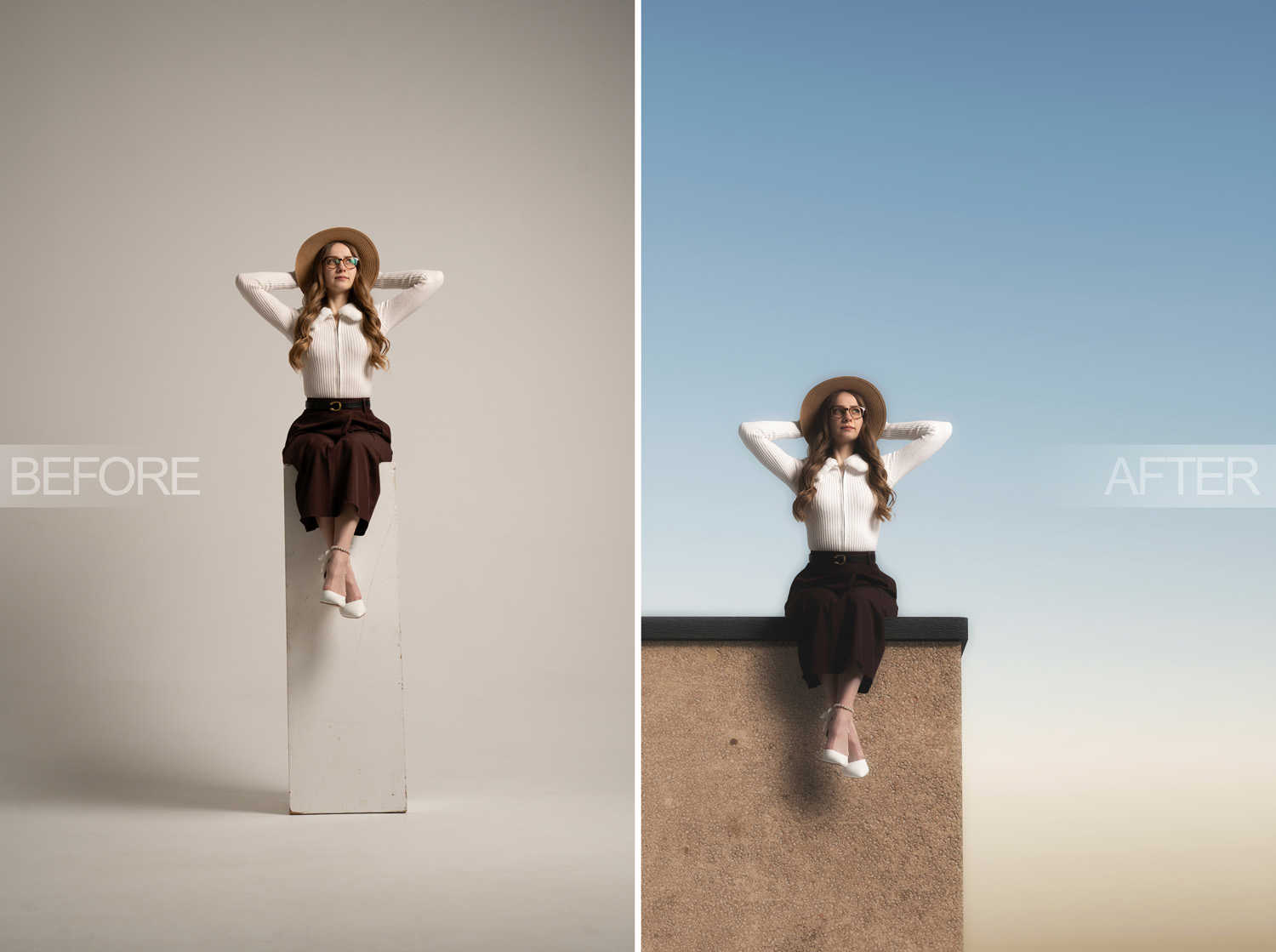
Andrey also shared a timelapse video showing the entire creation process step by step, from the original studio photograph to the final conceptual artwork.
Looking at these examples side by side, it becomes obvious that editing is not one universal process. Every photographer uses it differently. Some shape atmosphere, some simplify composition, and others build entirely new visual worlds around their images.
But all of them are ultimately doing the same thing: helping the photograph communicate more clearly. Especially in photography contests, where images are viewed quickly and compared against hundreds of others, that extra level of refinement can completely change how memorable the final work feels.
A strong photograph often starts in-camera. But very often, it becomes complete only after the editing process is finished.